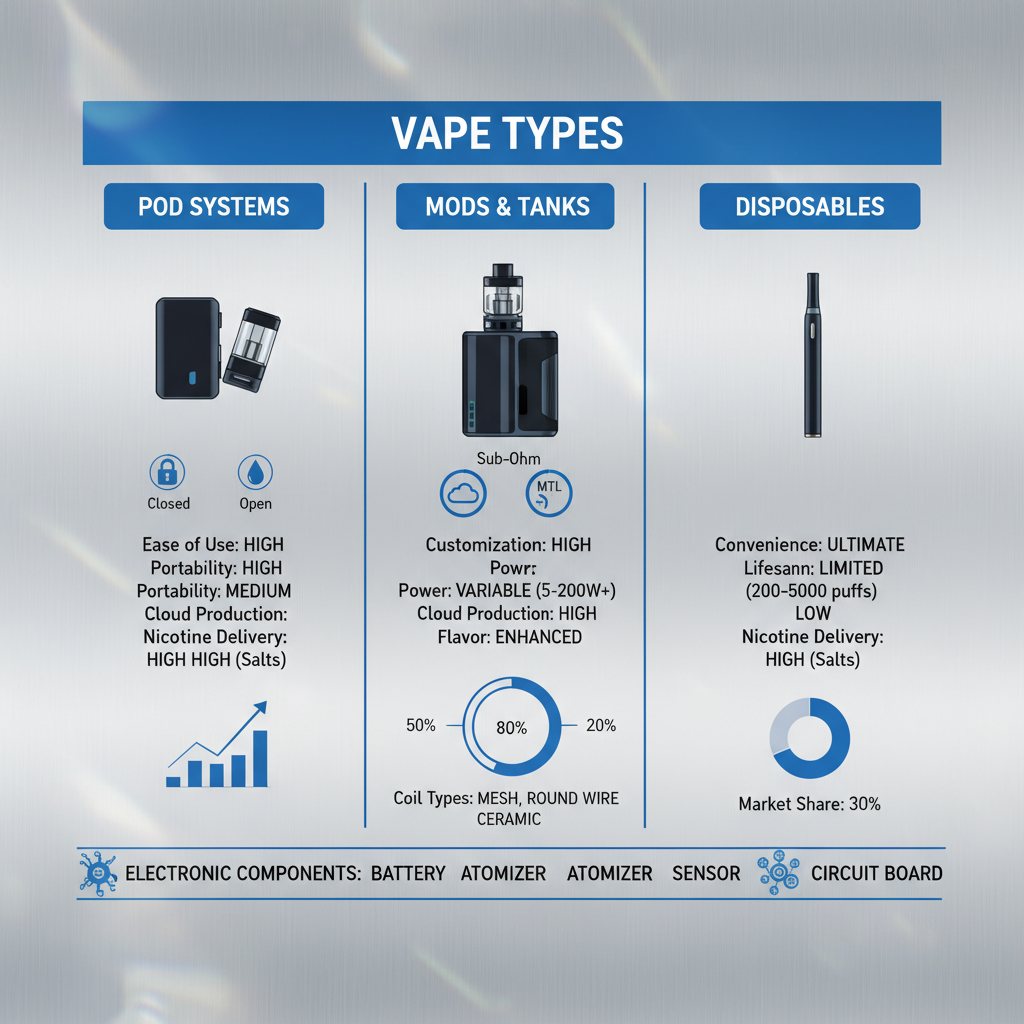
The global landscape of nicotine delivery has undergone a seismic shift over the last decade, moving from traditional combustible products to a sophisticated array of electronic alternatives. Understanding the different types of e cigarettes is no longer just for enthusiasts; it is essential for consumers seeking safer alternatives and for manufacturers striving to meet diverse user needs. From simple disposables to high-performance mods, the variety available today reflects a broader industrial move toward personalization and harm reduction.
Across international markets, the adoption of these devices is influenced by varying regulatory frameworks and consumer preferences. In regions like Europe and North America, there is a significant lean toward regulated pod systems and open-tank designs that prioritize transparency and quality control. This evolution is not merely about hardware but involves a complex synergy of chemical engineering for e-liquids and ergonomic design for the devices themselves, ensuring that each user finds a tool that fits their specific lifestyle.
The core challenge facing the industry today is balancing accessibility with safety. With the proliferation of various device architectures, the "one size fits all" approach has vanished. By exploring the technical distinctions between different types of e cigarettes, users can make informed decisions about nicotine concentrations, battery safety, and coil longevity, ultimately leading to a more sustainable and satisfying transition away from traditional smoking.
Global Relevance of Different Types of E Cigarettes
On a global scale, the shift toward different types of e cigarettes has been driven by a public health imperative to reduce the incidence of tobacco-related diseases. According to data trends often mirrored in ISO standards for electronic devices, the precision of heating elements and battery stability has become the benchmark for global trade. The relevance of these devices extends beyond mere habit substitution; they represent a convergence of electronics and pharmaceutical-grade delivery systems.
In many developing economies, the introduction of affordable, low-maintenance e-cigarettes has provided a pathway for smoking cessation in areas where clinical support is scarce. The industrialization of these devices allows for rapid deployment and scalability, ensuring that whether a user is in a high-density urban center or a remote provincial town, they have access to a device that meets their specific nicotine requirements.
Defining the Architecture of Electronic Nicotine Delivery
At its simplest level, electronic nicotine delivery systems (ENDS) are devices that use a battery to heat a liquid, creating an aerosol that the user inhales. However, when we discuss different types of e cigarettes, we are actually talking about a spectrum of complexity. At one end, you have "Cigalikes," which mimic the look and feel of traditional cigarettes, and at the other, you have high-wattage "Box Mods" that offer complete control over the vaping experience.
The distinction between these architectures is critical because it determines the user's relationship with the device. Pod systems, for instance, bridge the gap between simplicity and performance, utilizing pre-filled cartridges that minimize leakage and maintenance. This architectural evolution is a response to the humanitarian need for intuitive, fail-safe products that do not require a technical manual to operate safely.
Modern industry standards now categorize these devices based on their "open" or "closed" nature. Closed systems are restricted to proprietary pods, ensuring a consistent experience and higher safety margins, while open systems allow users to fill their own tanks, providing unparalleled flexibility in flavor and nicotine strength. This dichotomy allows the market to cater to both the novice switcher and the experienced hobbyist.
Core Components for Performance and Safety
The efficacy of different types of e cigarettes relies heavily on the quality of the atomizer. The atomizer consists of a coil—usually made of Kanthal, Stainless Steel, or Nichrome—and a wick. The interaction between the heat generated by the coil and the absorbent properties of the wick determines the smoothness of the vapor and the intensity of the flavor.
Battery safety is the most paramount factor in the design of electronic nicotine systems. Most modern devices utilize Lithium-ion cells, which require sophisticated Battery Management Systems (BMS) to prevent overcharging and short-circuiting. The scalability of these batteries allows different types of e cigarettes to range from discreet, slim-line pens to heavy-duty mods that can last for several days of use.
Lastly, the chassis material impacts both durability and user comfort. While early devices relied heavily on plastics, current industry leaders utilize aircraft-grade aluminum, zinc alloys, and heat-resistant polymers. This shift ensures that the device can withstand the thermal stress of repeated firing cycles while remaining lightweight enough for portable, daily use.
Market Application and User Use Cases
The application of these devices varies wildly depending on the user's goals. For those transitioning from heavy cigarette use, high-nicotine salt pod systems are often the preferred choice due to their rapid absorption rates, which closely mimic the "hit" of a combustible cigarette. In professional settings, the discreet nature of these slim devices allows for a seamless integration into a corporate lifestyle without the intrusive odor of smoke.
Conversely, in the realm of "cloud chasing" or flavor exploration, larger mods are the gold standard. These are frequently used in specialized communities and exhibitions where the volume and density of the aerosol are the primary objectives. This segmentation shows that the industry has successfully moved from a generic product to a targeted solution model, where hardware is matched to the psychological and physical needs of the user.
User Preference Across Different Types of E Cigarettes
Tangible Advantages and Long-Term Value
One of the most significant advantages of adopting different types of e cigarettes is the drastic reduction in harmful combustion byproducts. By replacing the burning of organic matter with the vaporization of a controlled liquid, users avoid the thousands of toxins found in cigarette smoke. Logically, this leads to a perceived and often actual improvement in respiratory comfort and a return of taste and smell senses.
Beyond health, the long-term economic value is undeniable. While the initial investment in a high-quality mod or pod system can be higher than a pack of cigarettes, the recurring cost of e-liquid and coils is significantly lower. Emotionally, this transition provides users with a sense of agency and control over their consumption, replacing a compulsive addiction with a manageable, customizable habit.
Future Innovations in Vaping Technology
The future of the industry is leaning heavily toward "smart" integration. We are seeing the emergence of devices that connect via Bluetooth to smartphones, allowing users to track their nicotine intake, monitor battery health in real-time, and even customize temperature curves for different e-liquid flavors. This digital transformation turns a simple tool into a wellness device.
Sustainability is another critical frontier. The industry is moving away from disposable plastics toward biodegradable polymers and recyclable battery modules. The goal is to create a circular economy where the hardware of different types of e cigarettes does not contribute to environmental degradation, ensuring that harm reduction for humans does not come at the cost of the planet.
Furthermore, we expect to see advances in "ceramic heating" technology, which offers more uniform heat distribution and longer coil lifespans. This will reduce the waste generated by frequent coil replacements and provide a more consistent flavor profile, further cementing the role of electronic nicotine delivery in the modern health landscape.
Overcoming Current Industry Challenges
Despite the progress, the industry faces significant challenges, most notably the "black market" proliferation of unregulated devices. These counterfeit products often lack the essential safety circuitry mentioned earlier, leading to malfunctions. The solution lies in stricter certification processes and consumer education, helping users identify authentic, lab-tested hardware.
Another hurdle is the inconsistency of e-liquid standards. To combat this, the industry is moving toward a global harmonization of ingredients and labeling. By establishing clear, transparent guidelines for nicotine purity and flavoring agents, manufacturers can ensure that regardless of the device type, the chemical experience remains safe and predictable.
Finally, the social stigma surrounding vaping persists. The path forward involves evidence-based communication and collaboration with healthcare providers to position different types of e cigarettes as legitimate tools for cessation rather than mere lifestyle accessories.
Comparative Analysis of Different Types of E Cigarettes
| Device Type |
Ease of Use |
Customizability |
Long-term Cost |
| Disposable Pods |
10/10 |
1/10 |
High |
| Pod Systems |
8/10 |
4/10 |
Medium |
| Box Mods |
4/10 |
10/10 |
Low |
| Vape Pens |
7/10 |
5/10 |
Medium |
| Cigalikes |
9/10 |
2/10 |
Medium |
| Hybrid Systems |
6/10 |
7/10 |
Low |
FAQS
For beginners, pod systems are generally the best choice. They offer a balance between ease of use and performance, requiring very little maintenance compared to mods. They are intuitive, leak-resistant, and provide a satisfying experience without the need to understand complex settings like wattage or coil resistance.
Choose a closed system if you prioritize convenience and consistency; these use pre-filled pods and are virtually maintenance-free. Choose an open system if you want to save money in the long run and enjoy a wide variety of flavors and nicotine strengths by filling your own tank.
In terms of nicotine delivery, yes, they are effective. However, they are far less sustainable and more expensive over time. Refillable systems provide a more tailored experience and are significantly more eco-friendly, making them a better long-term solution for those committed to switching.
Always look for devices that have a certified Battery Management System (BMS) and are produced by reputable brands. Avoid unbranded devices from unauthorized sellers. Check for safety certifications (like CE or UL) and ensure the battery is authentic and properly rated for the device's power output.
The variety exists because users have different needs. Some want a discreet tool to quit smoking, some want a high-flavor hobby, and others want a powerful device for cloud production. The industry has evolved to provide specific hardware for each of these distinct user personas.
Coil lifespan varies by device and e-liquid, but generally, you should replace them when you notice a burnt taste, a decline in vapor production, or a change in flavor. For most users, this happens every 1 to 2 weeks depending on usage frequency.
Conclusion
Navigating the world of different types of e cigarettes reveals a sophisticated industry dedicated to harm reduction and user experience. From the streamlined simplicity of pod systems to the technical precision of box mods, the diversity of available hardware ensures that every individual can find a path that suits their health goals and lifestyle. By focusing on battery safety, material durability, and sustainable production, the industry is maturing into a professional sector of the light manufacturing world.
Looking forward, the integration of smart technology and biodegradable materials will likely define the next generation of devices. We encourage users to prioritize quality over cost and to stay informed about the evolving standards of electronic nicotine delivery. For those seeking premium, reliable, and innovative solutions, we invite you to explore our full range of professional products. Visit our website: www.sxzpods.com